The Science Behind Body Doubling: Why It Helps ADHD Brains Regulate and Focus
In the last couple of years, I’ve had more adult clients ask about a strategy that sounds deceptively simple: body doubling. The concept is straightforward—working in the presence of another person (physically or virtually) to improve focus and task completion. What’s striking, however, is how powerful this strategy can be for individuals with ADHD.
For many high-functioning adults, the barrier to productivity is not intelligence or capability. It’s regulation. Initiating tasks, sustaining attention, and managing internal distractions can feel disproportionately difficult—even for highly accomplished professionals. Body doubling offers something subtle but neurologically meaningful: external support for internal regulation.
What Is Body Doubling?
Body doubling refers to completing tasks alongside another person who is also working. The “double” does not need to actively assist. Their presence alone can help anchor attention. This can occur:
- In shared workspaces
- During virtual co-working sessions
- While studying in libraries
- In structured accountability groups
Although body doubling is widely discussed in ADHD communities, its effectiveness can be understood through established executive function and motivational research.
ADHD as a Disorder of Self-Regulation
ADHD is increasingly conceptualized not simply as a deficit of attention, but as a disorder of behavioral inhibition and self-regulation (Barkley, 1997; Barkley, 2014). Executive functions—such as task initiation, working memory, inhibition, planning, and emotional regulation—are mediated by frontostriatal systems that are often underactivated in ADHD.
Barkley (1997) proposed that impaired behavioral inhibition disrupts downstream executive processes, making self-directed action more difficult. In practical terms, many adults describe the experience as:
“I know what I need to do. I just can’t get myself to start.”
This is not a failure of knowledge. It is a difficulty with activation and sustained effort over time.
Externalizing Executive Function
One of Barkley’s central clinical recommendations is the externalization of executive functions—moving regulatory demands out of the mind and into the environment (Barkley, 2012; Barkley, 2014). This may include:
- Visible reminders
- Timers
- Structured routines
- Immediate accountability
Body doubling functions as a live environmental scaffold. The presence of another person reduces the internal load required for self-initiation. Instead of relying solely on internally generated motivation, the ADHD brain receives an external cue that supports task activation.
This aligns with Brown’s (2013) model of ADHD as a disorder of executive function networks, particularly those involved in activation and sustained effort.
Dopamine and Motivation
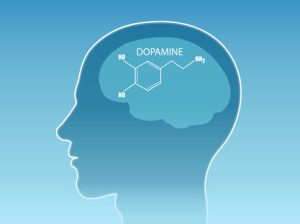 Neuroimaging research supports the role of dopaminergic dysfunction in ADHD, particularly within reward-processing pathways (Volkow et al., 2009). Tasks that lack immediate reinforcement are often neurologically harder to initiate.
ADHD motivation is frequently described as interest-based rather than importance-based (Barkley, 2014). The subtle social presence of another person can increase task salience and arousal just enough to help cross the initiation threshold.
Even minimal social engagement may provide sufficient stimulation to make a task feel less aversive.
Social Facilitation
The social facilitation effect demonstrates that the presence of others can enhance performance on certain tasks (Zajonc, 1965). Although this research was not conducted specifically on ADHD populations, the principle is relevant: mild increases in arousal can improve engagement and persistence.
For individuals with ADHD—who often experience under-arousal during low-interest tasks—the presence of another person may provide the optimal level of activation needed for focus.
Co-Regulation and Emotional Stability
Executive functioning and emotional regulation are closely linked (Barkley, 2012). Many adults with ADHD experience fluctuations in arousal and frustration tolerance that interfere with task persistence.
Interpersonal neurobiology research emphasizes that humans regulate one another’s nervous systems through relational presence (Siegel, 2012). Sitting near a calm, focused individual may stabilize arousal and reduce avoidance behaviors, making sustained effort more accessible.
While body doubling itself has not been directly studied as a clinical intervention in large-scale trials, its mechanisms align with established research in executive function, dopamine regulation, and social facilitation.
References
- Barkley, R. A. (1997). Behavioral inhibition, sustained attention, and executive functions: Constructing a unifying theory of ADHD. Psychological Bulletin, 121(1), 65–94. https://doi.org/10.1037/0033-2909.121.1.65
- Barkley, R. A. (2012). Executive functions: What they are, how they work, and why they evolved. Guilford Press. ISBN: 978-1462505357
- Barkley, R. A. (Ed.). (2014). Attention-deficit hyperactivity disorder: A handbook for diagnosis and treatment (4th ed.). Guilford Press. ISBN: 978-1462517725
- Brown, T. E. (2013). A new understanding of ADHD in children and adults: Executive function impairments. Routledge. ISBN: 978-0415814256
- Siegel, D. J. (2012). The developing mind (2nd ed.). Guilford Press. ISBN: 978-1462503902
- Volkow, N. D., Wang, G. J., Kollins, S. H., et al. (2009). Evaluating dopamine reward pathway in ADHD: Clinical implications. JAMA, 302(10), 1084–1091. https://doi.org/10.1001/jama.2009.1308
- Zajonc, R. B. (1965). Social facilitation. Science, 149(3681), 269–274. https://doi.org/10.1126/science.149.3681.269
error: Content is protected !!